
Visiting Apollonia: ancient city, museum and monastery
Columns above the Myzeqe plain, an odeon and a museum in a medieval monastery. Give Apollonia an unhurried half-day and make sense of the ancient city, from Vlorë or as a planned stop on your journey.
Unfold Albania Editorial · Sources reviewed: · 9 min read
Plan your visit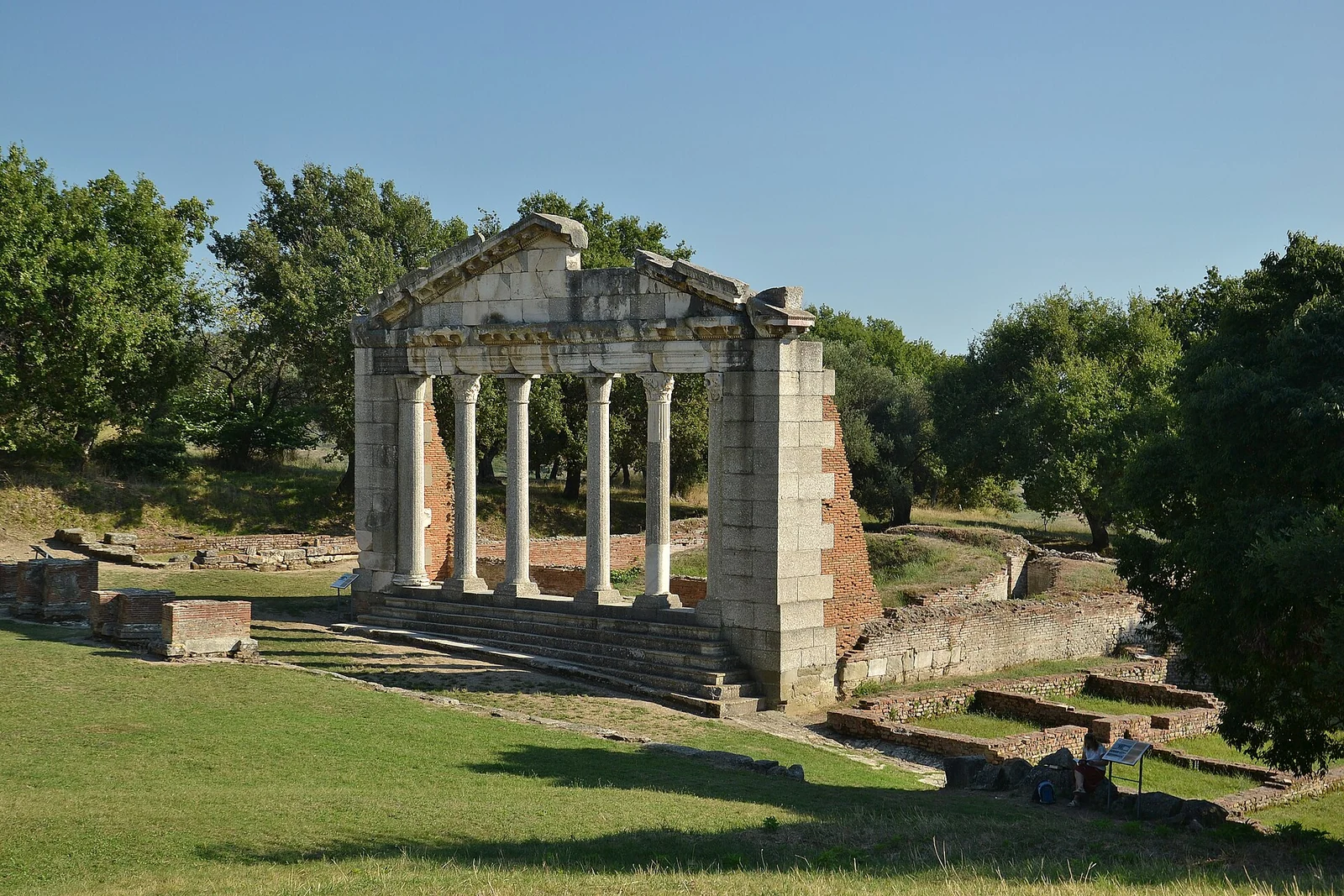
At a glance
- Our starting point
- Allow an unhurried half-day for the monumental centre, museum and monastery; add further ruins when time and energy allow.
- Arrive with time
- Ask which indoor spaces are open and when they close; do not automatically leave the museum until the end.
- Without your own car
- Agree transport to the parking area or visitor entrance and a return journey. Reaching Fier alone is not a complete visit plan.
- Two monasteries
- Saint Mary’s monastery at Apollonia and Ardenica are separate places. This guide does not require an onward trip to Ardenica.
On this page
Why Apollonia deserves more than a column photograph
Apollonia works best when you stop collecting monuments for a moment. The remains occupy a landscape above the Myzeqe plain, near Fier. Building fragments, open ground and a monastery complex belong to the same visit. After several beach days, that combination offers a welcome change: you spend time outdoors, then compare the scale of objects in the museum with the buildings outside.
We would arrive with three questions in mind. Where did people gather, what can the museum tell you about their everyday lives and how was the place used later? Even a low wall becomes more interesting with that framework. You do not need a name for every foundation to understand something of the city. A shorter route with attention usually offers more than trying to cover every corner of the grounds.
Checked against: Albanian National Tourism Agency — Apollonia
Choose the scope of your visit
| Your situation | Our choice | Leave room for |
|---|---|---|
| A first visit with broad interests | Monumental centre, museum and Saint Mary’s monastery | An extra walk when weather and access allow. |
| A strong interest in archaeology | Orientation first, then more time at individual buildings | Ask which further monuments are reachable and how to return. |
| A travel day with luggage | Choose the core route and allow a generous margin before your next arrival | A second major attraction need not fit the same day. |
| A group with different energy levels | Share the main route and keep an extension optional | The longest walk does not determine the value of a visit. |
Arriving by car: find the visitor entrance
Save the archaeological park pin near Fier and check the approach from your own departure address. Maps use different spellings, including Apollonia and Apolonia. Choose the archaeological destination rather than relying on a hotel name or a broad place marker. The difference between a motorway exit and the entrance matters when you are fitting a stop into a journey.
On arrival, follow the parking instructions and make your way to visitor information without rushing. Ask where to start, which route is recommended and where you finish. Have water, shoes and your small bag ready before leaving your accommodation. On a travel day, avoiding an entire suitcase unpacking session is a useful comfort. We do not give a fixed parking capacity or charge because the visitor information used here does not establish either.
Without a car: separate Fier from the final leg
A bus to Fier does not establish transport all the way to Apollonia’s entrance. Discuss the final leg beforehand with your accommodation or a local transport provider. Share the correct park pin and ask where you will be dropped off, when collection happens and how to stay in contact. Establish whether a driver waits or returns later: those are different arrangements to price.
From Vlorë, we would first compare a complete return transfer with a clearly described excursion. For a tour, ask how much time remains inside the park and whether the museum and monastery form part of the programme. Have any public-transport connection confirmed for your date. An uncertain short ride at the end can matter more than the main journey. Settle the return before walking into the grounds.
Start with the monumental centre
The striking columned structure belongs to the bouleuterion, associated with the seat of civic government. Start by looking at the relationship between buildings instead of immediately standing in front of the facade. What lies before it, which way does the entrance face and what other remains surround it? Those simple questions turn a photograph stop into a first mental map.
Use the names on the signs or the material you receive locally. The park’s own gallery also identifies the Monument of the Agonothetes with this building, so different names can refer to the same recognisable feature. Take time to look from a distance before seeking out details. Stay on the visitor route and avoid treating ancient masonry as steps to a better camera position.
Checked against: UNESCO World Heritage Centre — The Ancient City of Apollonia, Tentative List, Apollonia & Byllis Archaeological Parks — monuments and museum gallery
Odeon, colonnades and the city between buildings
The odeon and stoas, or colonnaded walks, are among the monuments the operator identifies separately. At the odeon, look at the relationship between seating and the open space in front. Then resist moving straight to the next highlight: the ground between structures helps you read this as a public environment. You do not need to accept a fully imagined reconstruction of the city to do that.
If you would like a longer walk, ask about a suitable extension. The official inventory also names a theatre and a nymphaeum. Their appearance in a list does not mean everything lies on one short, level circuit. Choose one additional goal with a clear approach and return. That gives you time to linger rather than hurrying back because the museum is still on your list.
Checked against: Apollonia & Byllis Archaeological Parks — monuments and museum gallery
The museum: give the finds their own attention
The archaeological museum is housed in the medieval monastery. The government’s museum description explains that the collection follows a chronological arrangement. Use that to your advantage: follow the broad timeline, then choose a few objects that catch your attention. For one of them, read the material, purpose and find context on its label. A small story is easier to retain than a photograph of every case.
We would treat the museum as a distinct part of the visit rather than a brief shelter from rain. Ask at the beginning which rooms and spaces are open and whether they have a separate closing time. If the museum closes earlier, reverse the order and start indoors. The sequence in this guide is an editorial suggestion; that day’s visitor instructions determine the workable order.
Checked against: Albanian Council of Ministers — Archaeological Museum Apollonia
Saint Mary’s monastery: notice the change of period
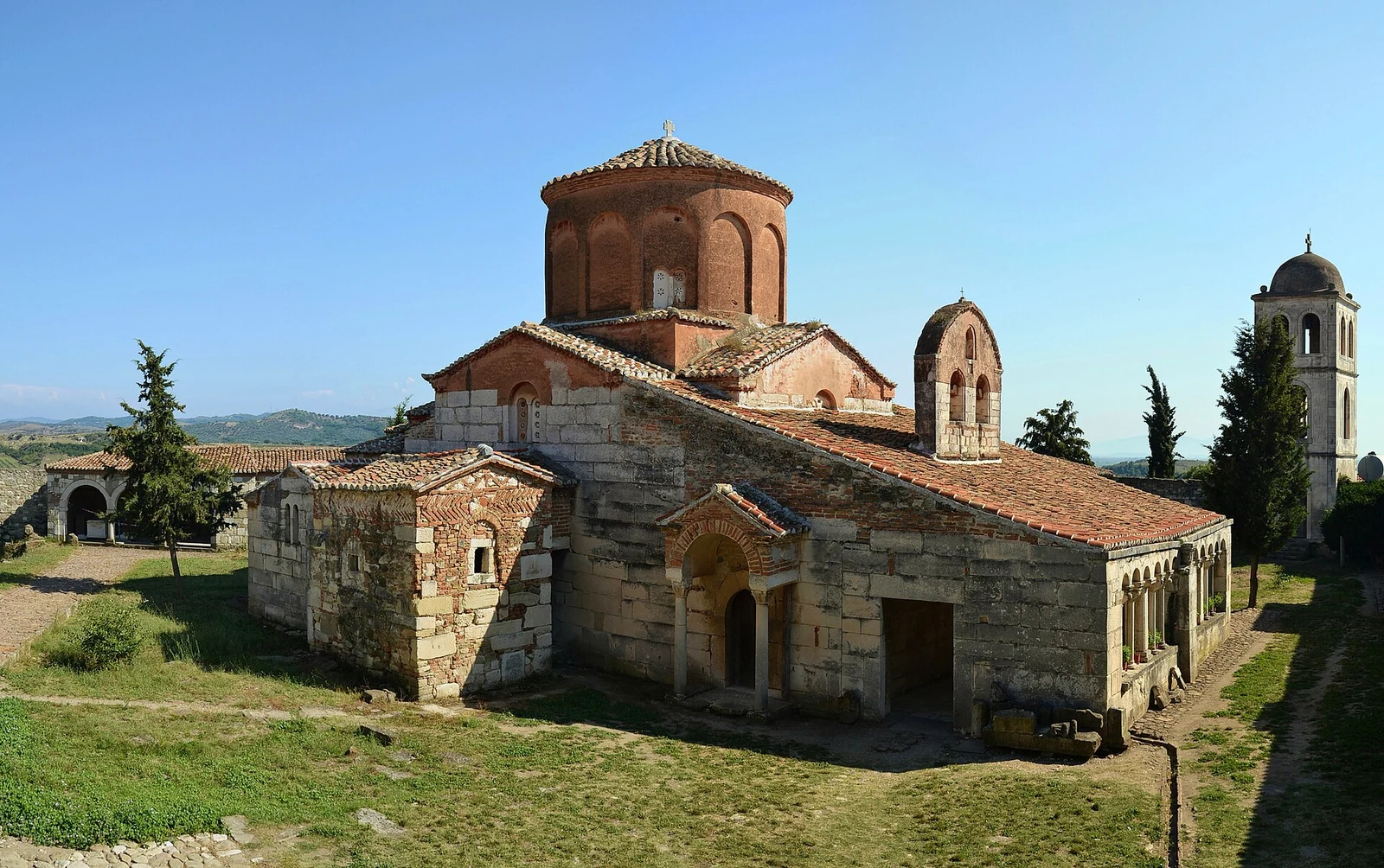
After the ancient city, the story changes at Saint Mary’s monastery and church. This is a medieval ensemble within the same historic setting. Notice the transition between open ground, courtyard and buildings. The stonework, shapes and scale bring a different rhythm to the visit. Access to a church interior is not necessary to make the exterior worth your attention.
Ask which parts visitors can enter and respect instructions when religious use takes place. The official regional itineraries distinguish this monastery from Ardenica. Check that difference when booking a driver or excursion: “a monastery near Apollonia” does not identify a single destination. For a first park visit, we would give the monastery here time before deciding whether a separate monastery stop adds anything to the day.
Checked against: UNESCO World Heritage Centre — The Ancient City of Apollonia, Tentative List, Apollonia & Byllis Archaeological Parks — regional itineraries
Tickets and opening: what the operator publishes
On 17 November 2026, the park website lists Tuesday–Sunday 09:00–16:00 for 1 November–28 February, last admission at 15:45 and Monday closure. The published individual price is 600 lek, with 500 lek listed for an individual online ticket. We have not tested the online link as a purchase transaction.
Before travelling, check the schedule for your date and ask whether the museum, church and indoor spaces you want to see are accessible within your ticket. The public price list does not separately establish that detail. Confirm payment methods and any discount conditions as well. Carry a modest cash reserve in lek without assuming that cash is the only accepted method. Last admission is not a sensible arrival time for the full circuit; come considerably earlier.
Checked against: Apollonia & Byllis Archaeological Parks — visitor information
An unhurried half-day: our suggested sequence
| Part of the visit | What to do | Why the sequence helps |
|---|---|---|
| On arrival | Discuss tickets, a map and the closing of indoor spaces | You can change the order before setting off. |
| First circuit | Explore the monumental centre and odeon without rushing | You gain a recognisable picture of the civic city. |
| Museum and monastery | Follow the timeline, choose a few objects and explore the medieval ensemble | You connect large buildings with smaller stories. |
| Optional extension | Choose one additional monument or landscape walk | You retain control of energy, weather and your agreed return. |
With children or a shorter comfortable walking range
For children, make a small looking game rather than a history examination. Find the shape of a column, a curved row of seats or a detail on a building together. Then choose one museum object to ask a question about. Keep the route short enough to preserve interest; a pause between parts is more useful than trying to remember every name.
With limited mobility, establish the approach from the drop-off, the entrance and your chosen indoor spaces before travelling. Ask about surfaces, slopes and steps on that particular route. Reaching the site by car does not establish step-free museum access. We have not completed an accessibility inspection. Discuss a smaller circuit when it suits you better and leave genuine room for anyone who prefers to finish earlier.
Sun, rain and what to carry
Treat Apollonia as an outdoor visit with an indoor element. Choose shoes comfortable on changing surfaces and take water, sun protection and an extra layer suited to the forecast. Keep your bag light: a large beach kit is unnecessary for the archaeological route. Avoid making an essential meal or facility depend entirely on something visible in an old photograph.
In warm weather, we would favour a start outside the hottest part of the day. In rain, adjust the walking route and pace. The museum can be worthwhile, but does not promise that all planned outdoor time can be comfortably replaced indoors. When unsure, check access first. Keep your driver arrangement and next accommodation pin offline too, so leaving remains straightforward.
From Vlorë or as a stop towards the coast
From a fixed base in Vlorë, you can give Apollonia its own half-day and return without changing accommodation. Look at the drive from your actual property: an address further along the bay changes the approach. Leave a quiet meal or evening after returning. That gives the cultural visit room without immediately attaching a second substantial programme.
The park can also fit between Berat and a coastal stay when you deliberately make time for it. Compare the entire day with driving directly, rather than only the additional line on the map. Discuss your expected check-in and allow for food and traffic. Avoid making Apollonia a compulsory final stop after several other attractions: a tired late arrival misses the point of combining grounds and museum.
Ardenica, Byllis or enough for today?
The park organisation publishes regional itineraries including Ardenica and Byllis. Treat them as ideas for a wider trip rather than automatic additions. Add another place only when interest, opening hours and transport fit. With one cultural half-day available, we would give Apollonia our full attention and save another visit for a different travel day.
UNESCO’s website places Apollonia on Albania’s Tentative List, with a submission from 2014. That is not inscription on the World Heritage List. The value of your visit need not depend on that label. Columns, museum and monastery already give you a worthwhile reason to spend time here. Finish by choosing what you actually want to see rather than adding one more name to the day.
Checked against: Apollonia & Byllis Archaeological Parks — regional itineraries, UNESCO World Heritage Centre — The Ancient City of Apollonia, Tentative List
Frequently asked questions
How much time should I allow for Apollonia?
We favour an unhurried half-day for arrival, the main ruins, museum and monastery. That is a planning recommendation rather than an official duration. A longer walking circuit or detailed guided tour needs additional time.
How much is an Apollonia ticket?
The operator publishes separate individual on-site and online prices. The amounts and review date are in the ticket section above. Follow its source link for the current park schedule too; confirm discount conditions and ticket coverage before travelling.
Can you visit Apollonia on a Monday?
Pay attention to the seasonal schedule. Do not automatically choose a Monday during winter; the operator’s published winter arrangement is set out above. Check for changes before leaving.
Is the museum the same as Ardenica Monastery?
No. Apollonia’s museum is associated with its own medieval monastery complex. Ardenica is a separate regional destination rather than a room or part of the park circuit.
Can I visit without a car?
Yes, with suitable arranged transport such as a return transfer or excursion. Confirm the final leg to the visitor entrance and the return journey. Transport to Fier alone does not automatically cover the complete visit.
Is Apollonia a UNESCO World Heritage Site?
The UNESCO page used here concerns Albania’s Tentative List. That is not World Heritage inscription. This guide uses the status precisely, alongside descriptions of the monuments themselves.
Sources & currency
This guide combines editorial planning advice with source information. The page date does not mean every fact was rechecked. Below you can see which sources were reviewed again and what that review covers.
- Apollonia & Byllis Archaeological Parks — visitor information
Source reviewed ·
Read on 17 November 2026: winter schedule, last admission and published individual on-site and online prices. No payment made; separate museum hours, ticket coverage and payment methods not confirmed.
- Apollonia & Byllis Archaeological Parks — monuments and museum gallery
Source reviewed ·
The park’s photographic inventory identifies the bouleuterion, odeon, stoas, theatre, nymphaeum and monastery. An inventory rather than confirmation that every feature is accessible each day.
- Albanian Council of Ministers — Archaeological Museum Apollonia
Source reviewed ·
The museum description locates the collection in the medieval monastery and explains its chronological presentation. Not used for current admission, the number of open rooms or other museums’ hours on the same page.
- Albanian National Tourism Agency — Apollonia
Source reviewed ·
Setting near Fier above the Myzeqe plain and the combination of ancient remains with Saint Mary’s. Its broad distance figure is not treated as a door-to-door route.
- UNESCO World Heritage Centre — The Ancient City of Apollonia, Tentative List
Source reviewed ·
Albania’s submission of 3 April 2014: Tentative List status, ancient civic government and medieval monastery complex. Not World Heritage inscription or a current visitor arrangement.
- Apollonia & Byllis Archaeological Parks — regional itineraries
Source reviewed ·
The operator distinguishes Apollonia and its own Saint Mary’s monastery from regional stops such as Ardenica and Byllis. Quoted driving times are not adopted as current journey times or a measured walk inside the park.
Previous article verification date: . How we research